-
 08 December 2023
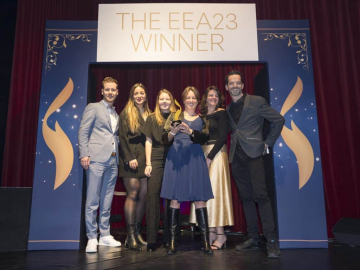
European Excellence Awards for Letterprins in Berlin
At an awards show in Berlin, the game Letterprins has received two European Excellence Awards, in the categories 'Science & Education' and 'Data-driven & Automated Communication'. The Letterprins game...
-
 22 June 2023
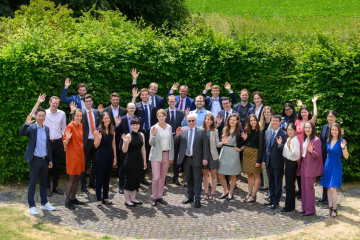
Otto Hahn Medals for Lot Snijders Blok and Micha Heilbron
Each year, the Max Planck Society awards up to 30 young scientists and researchers for outstanding scientific achievements with the Otto Hahn Medal. We congratulate Lot Snijders Blok and Micha...
-
 09 November 2022
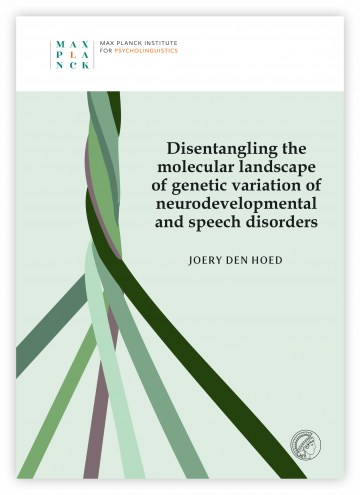
Joery den Hoed defends thesis on 14 November
On Monday, 14 November 12:30 hrs, Joery den Hoed will defend his thesis 'Disentangling the molecular landscape of genetic variation of neurodevelopmental and speech disorders'. A limited number of...
-
 20 October 2022
Gene study identifies series of DNA variants linked to dyslexia
An international team of scientists, including researchers at the University of Edinburgh and the Max Planck Institute for Psycholinguistics in Nijmegen (Netherlands), has for the first time...
-
 23 August 2022
Massive genome study informs the biology of reading and language
What is the biological basis of our uniquely human capacity to speak, read and write? A genome-wide analysis of five reading- and language-based skills in many thousands of people, published in PNAS...
-
 04 March 2022
Genetic links between mental disorders and social behaviour are variable
Many mental health conditions are associated with social difficulties, and mental disorders and social behaviour are genetically linked. But do genetic links vary with specific social traits? An...
-
 17 November 2021
Large study compares the brains of left-handers and right-handers
Roughly ten percent of people are left-handed, but the neural basis of handedness has been unclear. An international team led by researchers from the Max Planck Institute for Psycholinguistics and the...
-
-
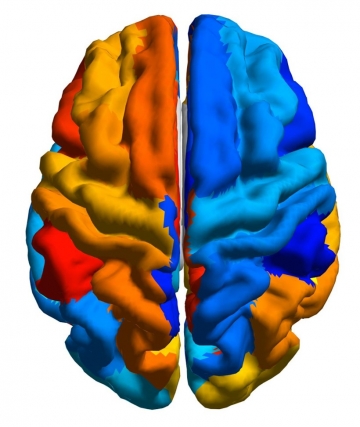 16 March 2021
Scientists link genes to brain asymmetry
The left and right sides of our brain specialise in different functions. But what is the genetic basis of this left-right asymmetry? In a large-scale genetic study, scientists from the Max Planck and...
-
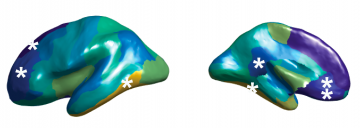 31 October 2019
People with autism have a more symmetrical brain
Do people with autism have differently organised brains? A large-scale MRI study, published in Nature Communications, reports fewer differences between the right and left hemispheres in people with...


Share this page